charlieshew.me
"Many Instruments. One Vision"
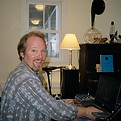
Charlie as studio engineer/session musician
When I'm not performing, I'm behind the glass or in front of it, or doing both at once. I record and mix acoustic, jazz, and hybrid projects and almost any style/genre of music — with an ear trained by years of playing the music I record. If you're looking for an engineer/musician who actually understands what you're going for, let's talk.
Text me or call me at 607-592-2050
Engineer
Five Decades Behind the Glass
My relationship with recording started in home studios in the mid-1970s — tape machines, patience, and a lot of trial and error. Since then I’ve worked across every era of the format: analog to digital, tape to varios DAWs, bedroom setups to major studio rooms.
From 1995 to 2000, I served as head recording engineer at Glyph Technologies, where I helped develop products for the music industry while recording projects for a range of artists. That stretch sharpened both sides of my ear — the part that hears a great take, and the part that understands the gear capturing it.
Outside of that chapter, I’ve recorded and played on sessions continuously, from my teenage years to now — a working engineer’s life, not a resume built for a single era.
Read on for some of the various published projects I've worked on over the years. This is certainly not all of the myriad projects I've worked on but the ones that you can currently access on the internet:
Entry #1
Entry #2
Session Musician
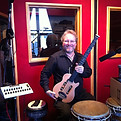
A history of my session work
Entry #1
Bernie Milton Band — Percussion & Guitar — Pyramid Sound Studio, Ithaca NY (1973)
My first real studio session — age 16, called in last-minute on guitar after the band’s guitarist was let go, while also playing percussion. Several tracks were recorded; some are preserved on YouTube today.
Entry #2
Home Recording Help
Your Songs Deserve to Be Heard Let’s Get Them Recorded
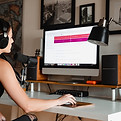
You don’t need a fancy studio to start making real recordings. You need the right setup, a little guidance, and someone who’s been doing this long enough to cut through the noise. I’ll help you get your music out of your head and onto a hard drive — simply, affordably, and at your own pace. And when you’re ready to take it further, you can bring your files to our studio - "Studio La Resistance" in Asheville to help you finish what you started.
Q: I’ve never recorded anything before. Is this really something I can do at home?
Absolutely — and you’d be surprised how little you need to get started. If you have a computer, a microphone, and something you want to record, we can build from there. I’ll walk you through every step so nothing feels overwhelming.
Q: What software will I be using?
I recommend a program called Tape 16. It’s designed to look and feel like a classic 16-track tape machine — which sounds retro, but actually makes it easier to learn, not harder. There’s no cluttered maze of menus. You arm a track, hit record, and play. It works on Mac, Windows, and Linux, so whatever computer you already own, you’re likely covered.
Q: Will my recordings be safe?
Your music never leaves your machine. Tape 16 keeps everything stored locally on your own hard drive — no automatic uploads, no third-party servers holding your songs. What you record is yours, period.
Q: Do I need to buy a lot of expensive gear?
Not at all. Beyond the software, most home recorders need just two things: an audio interface (a small box that connects your mic or instrument to your computer) and a microphone. There are excellent options at very affordable price points, and I’ll point you to exactly what makes sense for your situation — not just the most expensive thing on the shelf.
Q: What do I actually get when I hire you?
Depending on what you need, I can help with any or all of the following:
• Installing and configuring Tape 16 on your computer ($39 to own, no subscription)
• Selecting and setting up your audio interface and microphone
• Arranging your space so it sounds as good as your room allows
• Teaching you a simple workflow so your sessions stay organized and your recordings stay clean
Q: What happens after I record at home — is that the final product?
It doesn’t have to be. Once you’ve captured your ideas at home, you can bring those recordings into our studio "Studio La Resistance", where we can layer in additional instruments, add overdubs, and give your tracks a professional finish. Think of your home setup as the starting line — Studio La Resistance is where songs get completed.
Q: How much does this cost?
It depends on your starting point and what you need. Someone who just needs software guidance is a different conversation than someone starting from scratch with no gear at all. I keep it flexible and fair — reach out, tell me a little about your situation, and we’ll work out something that makes sense.
Get In Touch — Let's Figure Out Your Setup - text me or call me at:
607-592-2050